
In a world driven by mobile-first experiences, developing a high-quality iOS app isn’t just a technical project — it’s a strategic business investment. With millions of active iPhone and iPad users globally, iOS remains one of the most powerful platforms for delivering engaging digital experiences, reaching premium audiences, and driving meaningful engagement with your brand.
In this blog, we’ll walk you through everything you need to know about iOS app development — from why it matters to modern businesses, to the step-by-step process, tools and technologies, and tips for success.
Why Build a Native iOS App?
Developing for iOS is not just about writing code — it’s about tapping into a robust ecosystem that prioritizes performance, design excellence, security, and monetization opportunities:
1. Access a Premium User Base
iOS users are widely known for high engagement and spending power, which makes the platform ideal for businesses targeting quality over sheer volume of users.
2. Strong Security and Privacy
Apple’s ecosystem places a heavy emphasis on user privacy and app security. From system-level safeguards to App Store review processes, iOS offers an environment where user data protection is built in.
3. Consistency and Low Device Fragmentation
Unlike Android, iOS runs on a limited number of devices with predictable OS versions. This means easier testing, less fragmentation, and faster development time.
4. Higher Monetization Potential
iOS apps often generate more revenue per user compared to other platforms — through paid downloads, in-app purchases, and subscriptions.
5. Seamless UX Across Apple Ecosystem
Whether on iPhone, iPad, Apple Watch, or Apple TV, users expect uniform performance and design language — a standard that iOS development helps maintain.
What Goes into iOS App Development?
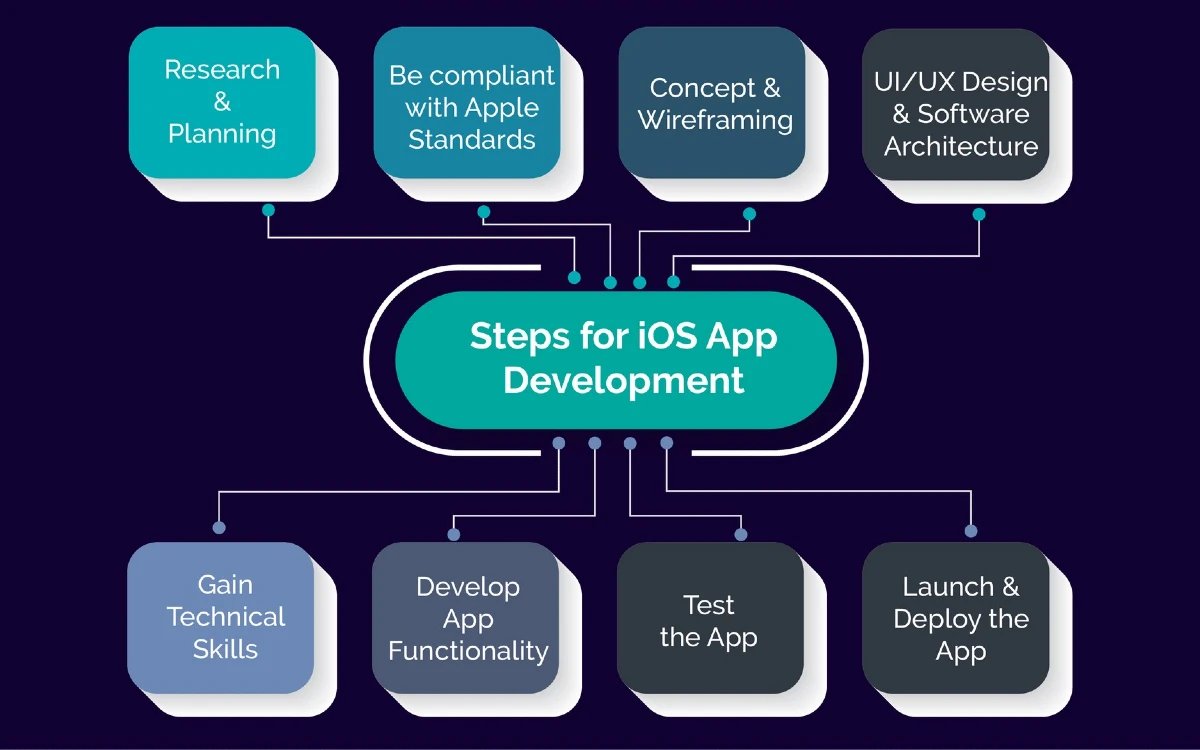
At its core, iOS app development blends strategy, design, engineering, and continuous optimization. Here’s how the process typically unfolds:
1. Strategic Planning & Conceptualization
Before writing a single line of code, successful iOS development begins with:
-
Defining your app idea: Determine the problem you want your app to solve and how it will benefit users.
-
Researching the market: Analyze competitor apps and market demand.
-
Understanding your audience: What features are essential for your target users?
-
Setting goals and KPIs: What are your success metrics? Downloads, revenue, engagement?
This foundational step helps align your app with both business objectives and real user needs.
2. UI/UX Design – User Comes First
Design is not decoration — it’s intuition and interaction. A high-quality iOS app prioritizes:
-
Clear information hierarchy
-
Natural navigation patterns
-
Visual consistency
-
Accessibility and simplicity
Many successful iOS apps follow Apple’s Human Interface Guidelines (HIG) to ensure best-in-class user experience across screens.
3. Setting Up the Development Environment
To develop native iOS apps, you need:
Core Tools & Requirements
-
Mac Computer – iOS apps are built using macOS tools.
-
Xcode – Apple’s official IDE for iOS development; includes a code editor, interface builder, simulator, and debugger.
-
iOS SDK (Software Development Kit) – Provides APIs and frameworks your app uses.
-
Apple Developer Account – Required to publish apps to the App Store.
With this setup, developers can build, test, and optimize apps for a range of iOS devices.
4. Choosing the Right Technology
While iOS apps can be built using various approaches, the most common choices are:
Swift Apple’s Preferred Language
Swift is a powerful, modern language crafted by Apple for performance and safety. It’s concise, fast, and the go-to choice for native iOS apps.
Objective-C — Legacy Support
Still in use for some older apps, Objective-C is compatible with existing codebases.
Cross-Platform Frameworks
Frameworks like Flutter or React Native allow building apps that run on both iOS and Android — useful for reaching wider audiences with shared code.
5. Development & Engineering
This is where your app takes form:
-
Coding app logic
-
Building screens and navigation
-
Integrating APIs and backend systems
-
Handling data storage
-
Implementing analytics and user tracking
Developers also use version control systems (like Git) to manage code efficiently across teams.
6. Testing & Quality Assurance
A flawless app requires:
-
Unit tests
-
Automated and manual testing
-
Performance profiling
-
Testing on real devices and simulators
Rigorous testing ensures that your app is stable and meets quality standards before it reaches users.
7. App Store Submission
Releasing your app involves:
-
Creating App Store assets (screenshots, descriptions, icons)
-
Meeting Apple’s strict review guidelines
-
Submitting through the Apple Developer Console
-
Going through review and approval
This process ensures that only high-quality, safe apps are available to users.
8. Post-Launch Support & Updates
Launching is just the beginning. Post-launch work includes:
-
Monitoring crash reports and analytics
-
Responding to user feedback
-
Fixing bugs and adding features
-
Updating for new iOS versions
Constant iteration keeps your app relevant and competitive.
Tools That Supercharge iOS Development
The right development tools can make the difference between a slow project and a smooth build:
Popular iOS Development Tools (2025)
-
Xcode: Core development IDE.
-
TestFlight: Beta testing with real users.
-
CocoaPods / Swift Package Manager: Dependency management.
-
Realm: Local database solution.
-
BuddyBuild: CI/CD automation for builds and tests.
These tools help streamline coding, debugging, testing, and deployment.
Best Practices for Successful iOS Apps
To stand out in a crowded market:
✔ Prioritize performance and responsiveness
✔ Follow Apple’s design paradigms
✔ Keep UI fluid and intuitive
✔ Ensure accessibility features
✔ Instrument analytics for insights
✔ Build with scalability in mind
✔ Stay updated with iOS platform changes
Following these practices improves user experience and boosts long-term engagement.
Conclusion
iOS app development is a dynamic blend of creativity, strategy, and technology. Whether you’re building a startup MVP or launching a large enterprise platform, mastering the development journey helps you bring valuable, user-centric digital experiences to life.
From ideation and design to deployment and post-launch support, each stage plays a critical role in your app’s success — and with the right approach, you’ll be well-positioned to deliver high-performance apps that delight users and elevate your brand.